WOW! Tony and his team completely transformed our front landscaping, which included a custom veneer retaining wall, shrubs, trees and a front curb light (with veneer) to match the house. We could not be more pleased!! Highly recommend!
Patios, walkways and driveways
What does stamped concrete add to a Parker patio or walkway?
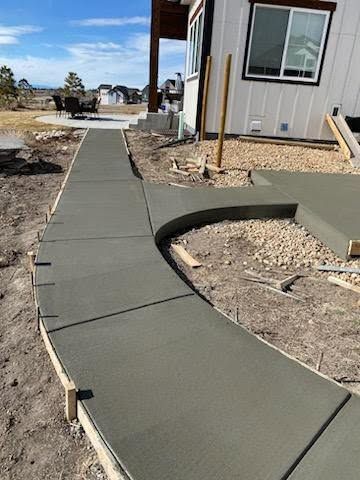
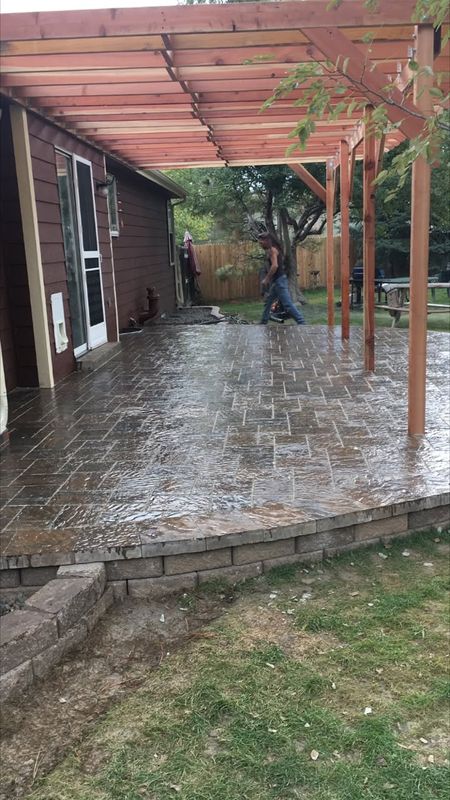
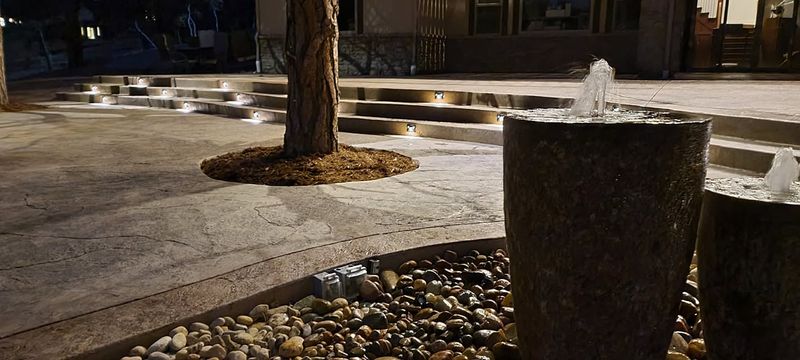
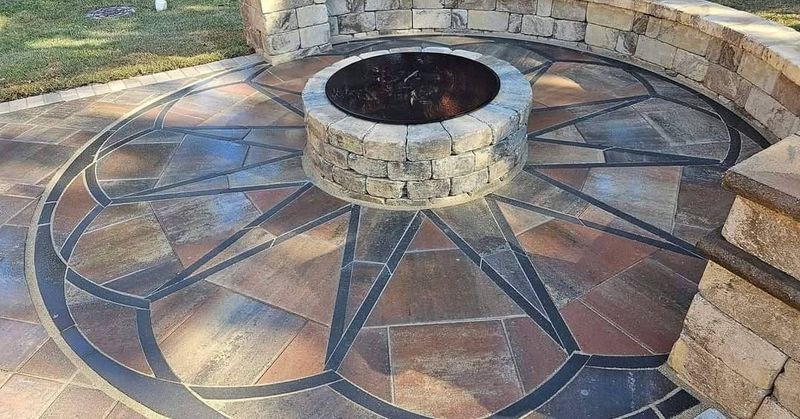
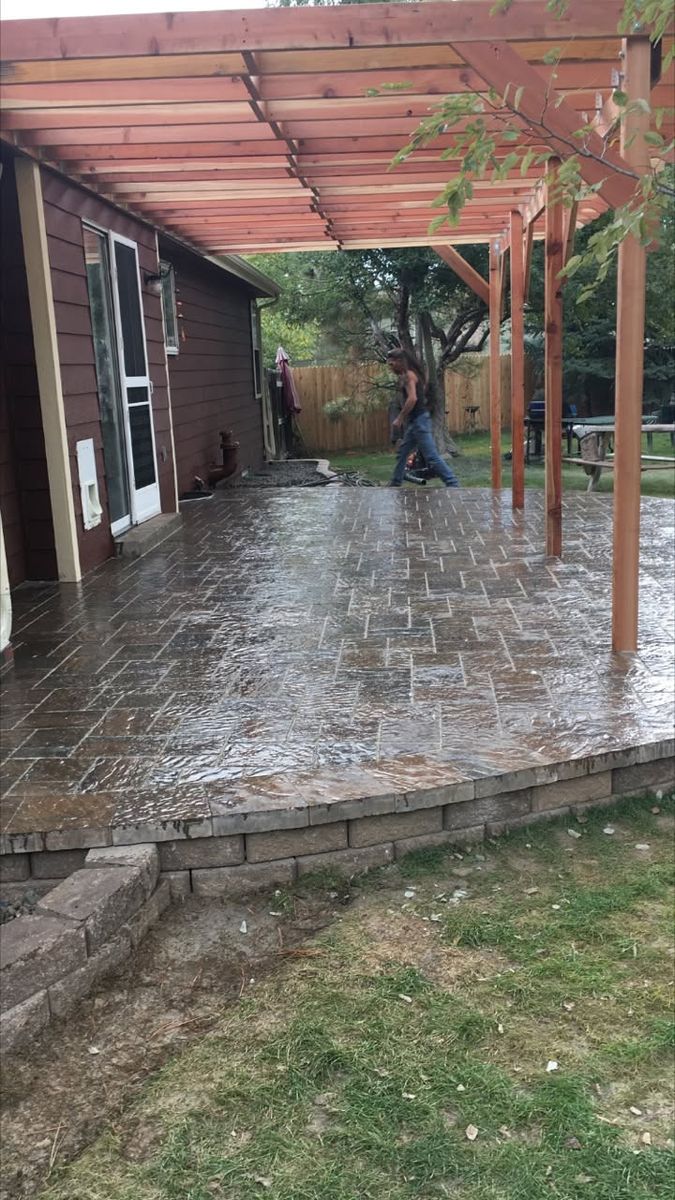
Stamped concrete is poured concrete finished to look like something else: ashlar slate, flagstone, brick or wood planks. You get the look of natural stone in one continuous surface, without the individual joints you see between pavers or flagstones. For homeowners in Parker, Elizabeth and Castle Rock, it is a way to dress up a patio, entry walk or driveway apron without committing to a full stone installation.
Colorado is hard on concrete. Freeze and thaw cycles, expansive clay soils and de-icers all test a slab, so the work under the surface matters as much as the pattern on top. Tony and the crew plan the base, drainage and joints first, then the color and texture. Not sure whether stamped concrete is right for your yard? Paver patios are the other route, and we compare the two below.
- Insured
- Locally owned
- Free estimates
- Residential and commercial
Pattern and finish
Which stamped concrete pattern and finish fits your home?
The finished look comes from three choices: the pattern, the color and the sealer. Here is what each one does.
Ashlar slate
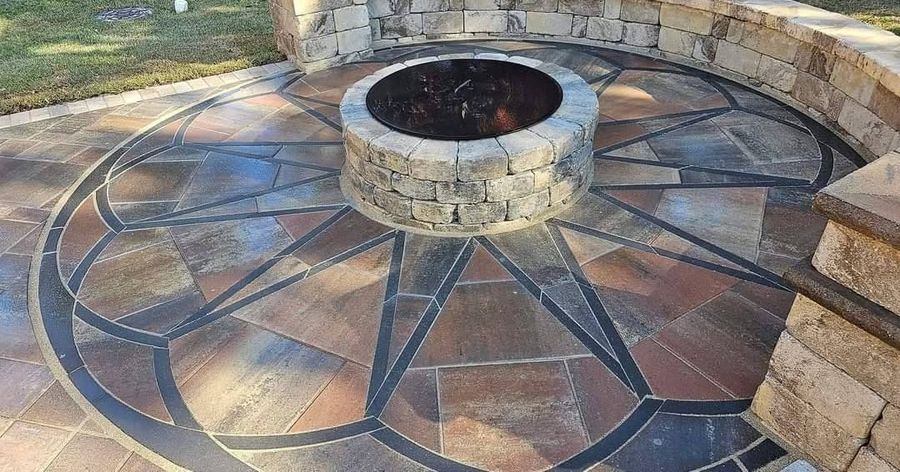
A cut-stone look with large and small rectangles laid in a random, interlocking pattern. It reads as natural slate underfoot and suits patios and larger entry areas where you want a formal, classic feel.
Flagstone
Irregular, organic shapes with soft edges, like stone gathered from a hillside. It works well for winding walks and garden-side patios, where a loose, natural layout fits the landscaping.
Wood plank
Long, narrow boards with a grain texture, giving the warmth of decking without the staining or splinters. It is a good match for pool-style areas, porches and covered patios.
Color and release
Color can be mixed into the concrete, broadcast on the surface, or both, and a release agent gives the contrasting, aged tone in the grout lines and texture. Slate grays, sandstone tans and earthy browns are common.
Sealer
A sealer finishes the surface, brings out the color and protects it from water, stains and de-icers. It can be matte or glossy, and a slip-resistant additive can be added where it matters. It is reapplied every few years.
Stamped concrete vs pavers
How does stamped concrete compare with pavers?
Both can give you a great-looking patio. These are general trade-offs, and the right pick depends on your soil, slope, budget and the look you want. We will tell you plainly which we would lean toward for your yard.
| Factor | Stamped concrete | Pavers |
|---|---|---|
| Look | One seamless surface with stone, slate, brick or wood patterns and custom colors. | Individual units in many colors, shapes and laying patterns, with visible joints. |
| Installation | Poured and finished in place. Needs good weather and a cure period before heavy use. | Laid piece by piece over a compacted base, then joints filled. Often more hands-on labor. |
| Cracking | Can crack as concrete cures or the ground shifts. Control joints guide where it happens. | Flexes with minor ground movement. A settled area can be lifted and reset. |
| Repairs | Cracks can be filled or patched, but matching color and pattern exactly is hard. | Replace or re-set individual pavers. Spare stock helps matching. |
| Upkeep | Reseal every few years. Rinse and clean as needed. | Refill joint sand, clean, and reseal if you want deeper color. Weeds can show up in joints. |
| Upfront cost | Often lower for a plain area, but patterns, colors and detail work add cost. | Often higher because of materials and labor, but it varies with product and size. |
| Winter care | Go easy on rock salt and chemical de-icers, which can scale concrete. | Shovel and plow with care so edges are not caught. Joints may shift over time. |
General comparison only. Actual cost, durability and upkeep vary by site, materials and installation.
How a stamped concrete project goes
What are the steps to a stamped concrete patio?
Walk the site and pick a design
We look at the area, the slope, where water runs and how you use the space. Then you choose a pattern and a color range, and we talk through layout, borders and control joints.
Prep, grade and form
The ground is excavated and graded for drainage, a compacted base goes down, and forms mark the edges. Reinforcement is placed to help the slab stay together.
Pour, color and stamp
Concrete is placed and leveled, color and release agent go on, and texture mats are pressed in while the surface is still workable. Timing matters here.
Cure, cut and seal
After the concrete cures, joints are cut where needed and a sealer is applied. We explain when you can walk on it, when furniture can go back, and how to care for it.
Where we work
Stamped concrete near Parker, Colorado
We install stamped concrete for homes and businesses across the south Denver metro and the Parker and Elizabeth area.
- Parker
- Franktown
- Elizabeth
- Centennial
- Castle Rock
- Castlewood
- Greenwood Village
Insured crew
Locally owned, with Tony leading the crew and Carol running the office
Free estimates on residential and commercial projects
Common questions
What should I know before choosing stamped concrete?
How long does stamped concrete last in Colorado?
It depends mostly on what is under it and how water leaves it. A well-compacted base, good drainage, properly placed control joints and a sealer kept up over the years all help a slab handle Front Range freeze and thaw cycles. Tony and the crew can walk your yard and tell you what they would do differently for your soil and slope.
Will stamped concrete crack?
Any concrete slab can crack, because concrete shrinks as it cures and the ground beneath it moves. Control joints are cut or tooled in so the slab cracks along planned lines instead of across the pattern. Expansive clay soils common in the south Denver metro make base prep and joint layout especially important.
Does stamped concrete need to be sealed?
Yes, a sealer is a normal part of the finish. It deepens the color, helps shed water and stains, and protects the surface from wear and de-icers. Sealer wears down over time, so expect to reapply it every few years. Ask about a slip-resistant additive for steps, pool-style areas or slopes.
Can I shovel and plow a stamped concrete surface in winter?
Yes. Shovel with a plastic-edged shovel when you can, and avoid harsh rock salt and chemical de-icers, especially on newer concrete, since they can scale the surface. Sand or a concrete-safe product is gentler. Because we also plow, we can talk through winter care for the slab while we plan it.
Should I choose stamped concrete or pavers?
Neither is better in every yard. Stamped concrete gives you a seamless surface in one pour and a wide range of patterns and colors. Pavers give you easy spot repairs and a flexible surface that handles ground movement. The comparison above lays out the trade-offs, and a free estimate can sort out which fits your site and budget.
Planning a stamped concrete patio or walkway? Tell us about your space.
Get a Free Estimate(720) 223-9488Related services
Reviews
Take a look at what your neighbors are saying about us.
Ready to get started?
Book an appointment today